
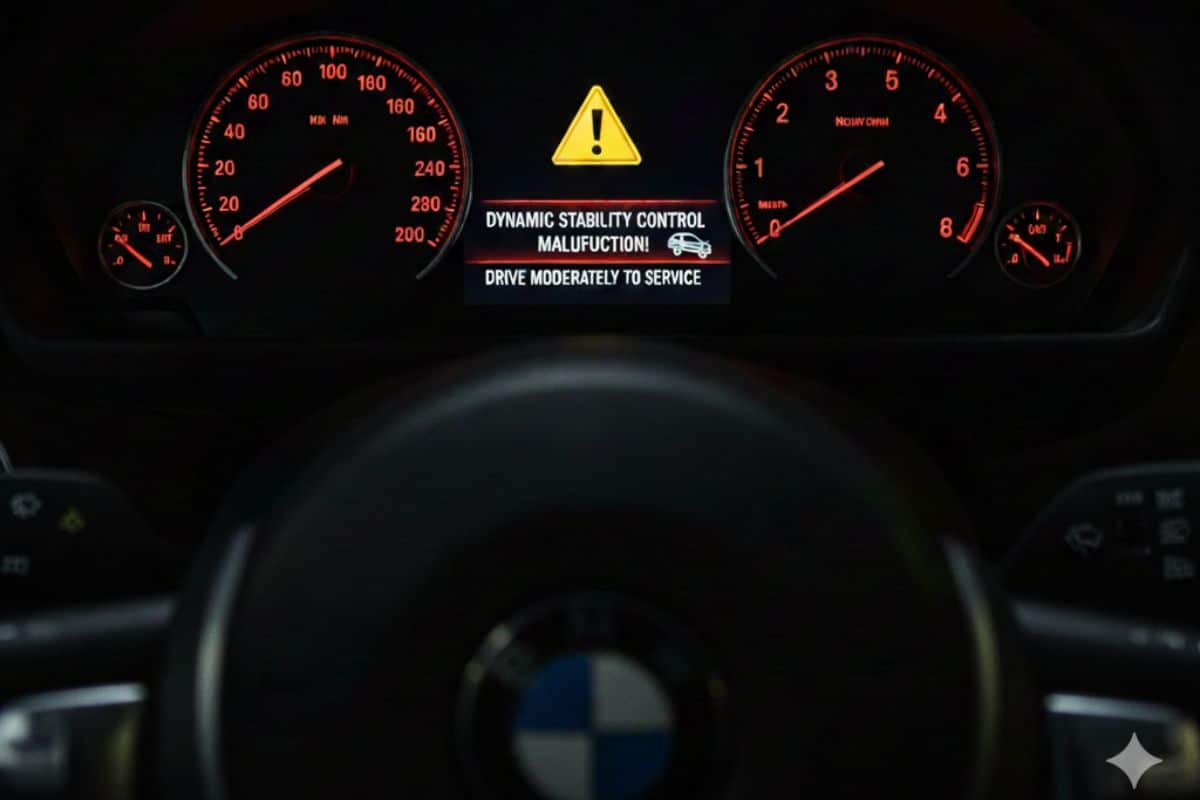
During rush hour, you’re merging onto I-15 when a yellow triangle with DSC suddenly lights up on your dashboard. Your BMW can feel a little weird, like it’s not as steady in corners or when you brake. That warning isn’t just a tiny mistake. A problem with your BMW’s Dynamic Stability Control can make it harder to avoid skids and lose control. If you don’t fix it, you and your car could be in danger.
Since 2008, Quality Star Benz and Bimmer has been helping BMW owners stay safe on the roads in Las Vegas. We’ve seen how fast a small problem with the DSC sensor can escalate into a costly repair if you don’t take care of it. We’ll talk about what causes DSC system failure, the indications to look for, and things you can do in Las Vegas to avoid expensive damage and keep your BMW running smoothly.
What is The Dynamic Stability Control on BMW?
It uses information from wheel speed sensors, steering angle sensors, yaw sensors, and ABS parts to keep you safe. If the automobile starts to oversteer or understeer, DSC steps in to maintain it on the right route by mildly braking certain wheels and lowering engine torque. It works very closely with ABS and traction control, so one problem can cause several warning lights to go out.
According to industry data, electronic stability control systems like BMW’s DSC cut down on single-vehicle crashes by about 49% and SUV rollovers by 75%. These numbers from the National Highway Traffic Safety Administration show that this technology saves lives.
Common Causes of BMW Dynamic Stability Control Malfunction
Knowing the usual culprits helps you prevent trouble before it starts:
- Faulty wheel-speed sensors / dirty sensors. Road dirt, rust, and physical damage can all hurt the dsc sensor BMW (wheel speed sensors). One of the main reasons for DSC alerts is sensor problems.
- Steering angle sensor issues. A steering-angle sensor that is not aligned or is broken confuses the DSC. Problems with steering that happen suddenly are commonly caused by this part.
- Low brake fluid or worn brake components. DSC uses the brakes to stop problems. Low fluid or broken ABS hardware might cause DSC problems.
- Electrical problems / weak battery. DSC needs power and clean connections to work. Corroded terminals, bad grounds, or a battery that isn’t working right might cause DSC failures that happen from time to time or all the time. If a battery tests below 12.6 volts while it is not being used, it might produce sporadic DSC failures that get worse with time.
- ABS module or hydraulic pump faults. These problems are worse and cost more to fix, but regular maintenance can often keep them from happening.
- AWD and DSC malfunction interactions. On AWD BMWs, problems with the drivetrain (such as broken transfer-case sensors or tires that are different sizes) might confuse both the DSC and AWD systems at the same time. That’s why AWD and DSC failure signals occasionally come up at the same time.
Symptoms to Watch For: Early Warning Signs
If any of these appear, get the car checked sooner rather than later:
- DSC / ABS / Traction control warning lights.
- Sudden or unexplained ABS activation under normal braking.
- Reduced traction or odd braking behavior in low-grip conditions.
- Erratic speedometer or intermittent speed sensor faults.
- Unexpected stability or traction interventions while cruising.
Sometimes a short restart can get rid of a temporary warning, but if the light comes back on, it’s a real problem, not a glitch.
Practical Prevention Tips (What You Can Do Now)
These steps cut most DSC problems off at the pass:
- Keep wheel-speed sensors clean and intact. Check the boots and connections on the sensors once a year and clean up any trash you see.
- Maintain brake fluid & brake system health. Change the brake fluid every two years, and replace damaged pads and rotors right away. DSC needs reliable hydraulics.
- Check battery health and wiring. Check the voltage and condition of the battery terminals during the yearly service; weak voltage is a surprisingly prevalent reason.
- Rotate tires and maintain proper tire pressure. DSC and AWD algorithms can become confused when the diameters of the tires are not the same because of wear.
- Avoid skipping ABS/DSC module software updates. When BMW distributes calibrations, dealers or specialized shops should use them when they can.
- Use a specialist for suspension/steering repairs. After doing any work on the front end, you usually need to recalibrate the steering angle sensor.
- Address dashboard warnings immediately. Taking action early usually lowers the cost of repairs from thousands to hundreds.
Typical Repair Costs and Realistic Expectations
Repair costs vary widely depending on cause — here’s a practical range to help you plan:
- Sensor clean/replace: $150–$600
- Brake fluid flush & minor hydraulic service: $150–$400
- Steering angle sensor recalibration/replacement: $200–$800
- ABS module/pump repair or replacement: $800–$3,000+
- Complex electrical or AWD-related diagnosis: $200–$1,200 in diagnostic time (parts extra)
If you respond quickly, you usually stay toward the lower end of these ranges. Ignoring DSC warnings makes it more likely that things will go wrong and costs will go up a lot.
How Quality Star Benz and Bimmer in Las Vegas helps
Since 2008, we’ve specialized in BMW systems — including DSC diagnostics and repairs. Our approach:
- Full diagnostics: OBD-II scanning plus live-data logging from ABS/DSC modules.
- Targeted repairs: Replace or repair only failed sensors/harnesses, then recalibrate.
- Preventative checks: Brake fluid condition, battery load test, sensor inspection.
- OEM-quality parts and calibrations to ensure your DSC system behaves exactly as BMW intended.
If you get a DSC warning, call 702-396-4216 right away. We’ll put you at the front of the list for a stability check. This is the best way to stay safe and avoid expensive repairs.
FAQs
Q: What is DSC on BMW?
A: DSC stands for Dynamic Stability Control — it helps prevent skids by adjusting brakes and engine torque using wheel-speed and steering data.
Q: What does a DSC warning light mean?
A: It indicates a fault in stability systems (ABS, traction control, DSC). The cause ranges from a dirty dsc sensor BMW to low brake fluid or wiring issues — professional diagnostics will pinpoint it.
Q: Can I drive with a DSC light on?
A: You can drive short distances carefully, but avoid slippery roads or high speeds. Driving with DSC disabled increases accident risk; get it checked promptly.
Q: Does AWD affect DSC behavior?
A: Yes. AWD and DSC malfunction errors can be linked — mismatched tires, drivetrain sensor faults, or transfer-case issues can trigger DSC warnings on AWD BMWs.
Q: How often should I inspect DSC components?
A: Inspect wheel-speed sensors, brake fluid, and battery annually; do immediate checks after suspension or wheel work.
Q: What causes BMW Dynamic Stability Control malfunction?
A: BMW Dynamic Stability Control malfunction is typically caused by failed sensors (45% of cases), including steering angle sensors and wheel speed sensors, electrical issues like corroded battery connections (25% of cases), low brake fluid (15% of cases), ABS module failures (10% of cases), and in AWD models, transfer case or xDrive system problems that trigger both AWD and DSC malfunction warnings.
Q: How much does it cost to fix BMW DSC problems?
A: DSC sensor BMW repair costs vary by issue: diagnostic checks run $100-200, sensor cleaning or battery service costs $100-300, individual sensor replacement ranges $300-800, ABS module replacement costs $800-2,000, and complex repairs involving multiple sensors and components can exceed $2,000-4,000. Early intervention typically saves significant money compared to delaying repairs.