
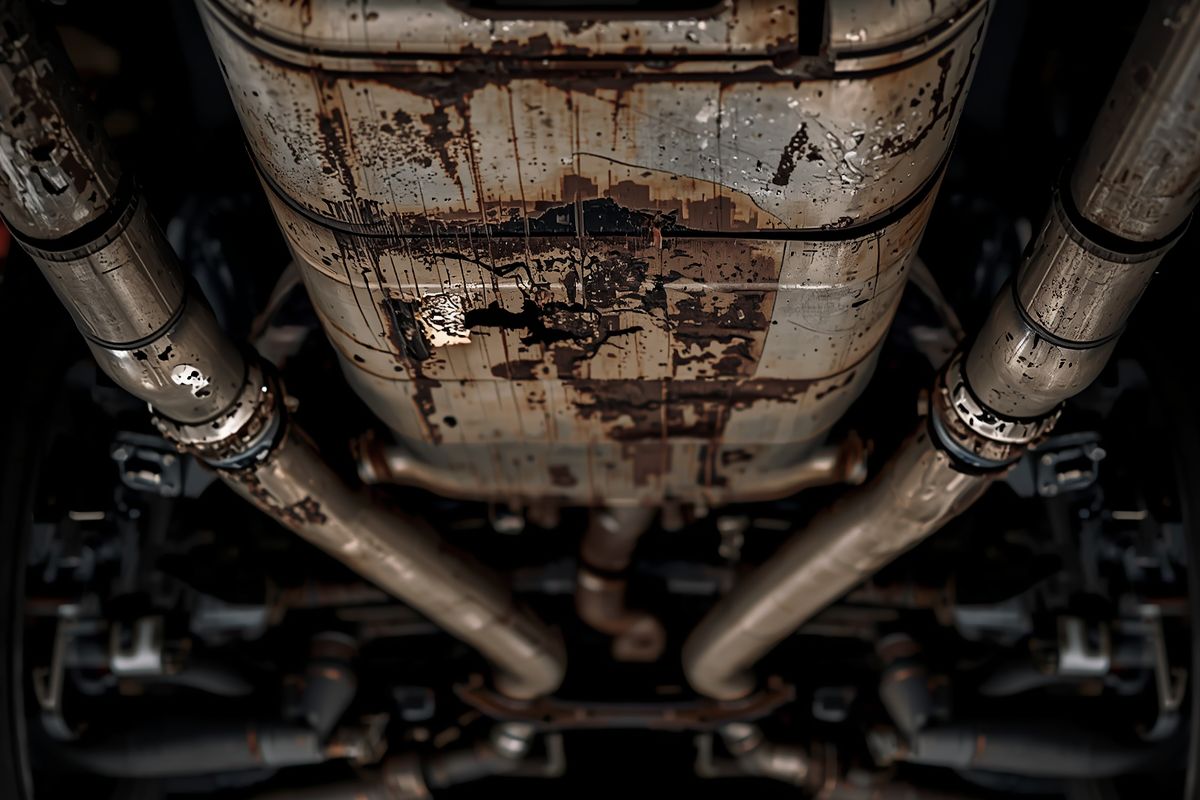
You’re driving your BMW 3 Series along the Las Vegas Strip when you notice a loud rumbling sound that wasn’t there before. You might also notice that your fuel efficiency has dropped a lot and that the exhaust smells like rotten eggs. These are often early symptoms that your BMW’s exhaust system isn’t working right.
The trouble is that a lot of drivers don’t pay attention to these warning signs until they turn into something worse, like a failed emissions test, a repair that costs more than $1,500, or even dangerous vapors getting into the cabin.
Let’s look at the most typical problems with BMW exhaust systems and how to tell whether your BMW’s exhaust system is failing early, before it costs a lot to fix.
What Does the BMW Exhaust System Actually Do?
Your BMW’s exhaust system is responsible for:
- Directing harmful gases away from the engine and cabin
- Reducing emissions
- Improving engine performance
- Controlling noise levels
Understanding Your BMW’s Exhaust System: More Than Just a Tailpipe
Your BMW’s exhaust system is a complex system for controlling pollutants and improving performance that has several important parts:
Exhaust Manifold: Collects exhaust gases from each cylinder and channels them into the exhaust system. Manifolds are likely to shatter over time when they are used at temperatures above 1,200°F.
Oxygen Sensors: Monitor oxygen content in exhaust gases, sending data to the engine computer to optimize the air-fuel mixture. Modern BMWs have 2-4 oxygen sensors.
Catalytic Converter: Changes toxic gases, including carbon monoxide, nitrogen oxides, and hydrocarbons, into less damaging pollutants. This part is usually the most expensive to replace, costing between $1,000 and $2,500.
Muffler and Resonator: Keep the right amount of backpressure for engine performance while lowering the noise from the exhaust.
Exhaust Pipes: Route gases from the engine through the system and out the tailpipe.
According to industry data, parts of the exhaust system usually last between 50,000 and 100,000 miles. However, the intense heat and temperature changes in Las Vegas can make them wear out 30 to 40% faster.
Top BMW Exhaust System Symptoms You Should Watch For
These are the most common BMW exhaust system symptoms you’ll notice in real driving situations:
1. Loud or Unusual Engine Noise
Noise is one of the first symptoms that a BMW’s exhaust system is failing.
- Roaring sound when accelerating
- Hissing or rattling noises
- Vibrations along with sound
This usually means that there is a leak in the exhaust, a broken muffler, or a fractured pipe. If your BMW suddenly sounds like a sports vehicle without trying, something is amiss.
2. Drop in Engine Performance
It’s not just “aging” if your BMW seems slower or has trouble speeding up. A BMW’s exhaust system that isn’t working right stops air from flowing, which impacts combustion.
You may notice:
- Sluggish acceleration
- Reduced engine power
- Delayed throttle response
It directly impacts your driving experience.
3. Poor Fuel Efficiency
Do you fill up more often? That’s a sign of trouble.
If the exhaust system isn’t working right, your engine has to use more fuel to make up for it. Studies suggest that exhaust problems can lower fuel economy by 10% to 20%.
If your gas mileage suddenly drops, it could be one of the first BMW exhaust problems.
4. Strong Smell Inside the Cabin
This one is serious.
If you smell:
- Gasoline
- Burning odor
- Rotten egg (sulfur smell)
…it could mean that there is a problem with the catalytic converter or an exhaust leak.
This is a safety issue. If your exhaust leaks, it might let dangerous gases into your cabin.
5. Check Engine Light Turning On
Modern BMWs are smart. When something’s off, they’ll tell you.
A fault:
- Oxygen sensor
- Catalytic converter
- Exhaust leak
…can all trigger the check engine light. If it appears along with other BMW exhaust system symptoms, don’t ignore it.
6. Visible Smoke or Emissions
Take a look at your exhaust.
- Black smoke → too much fuel burning.
- Blue smoke → oil burning
- White smoke → possible coolant issue
If your BMW is smoking too much, it’s a clear sign that the exhaust system isn’t working right and needs to be checked right away.
7. Vibrations While Driving
Feel unusual vibrations in:
- Steering wheel
- Pedals
- Floor
This is generally caused by exhaust parts that are loose or broken. It may appear small, but it’s a typical sign that there are difficulties with the BMW exhaust system.
The Most Common BMW Exhaust System Problems We See in Las Vegas
Based on our 15 years of working on BMWs, here are the main exhaust problems that BMW owners have:
1. Exhaust Leaks: The Noisy Performance Killer
About 40% of the BMW exhaust problems we find are caused by leaks. These leaks usually happen at:
- Manifold gaskets (heat cycling causes failure)
- Flex pipe connections (especially on turbocharged models)
- Welded joints (rust and vibration cause cracks)
- Flange connections (gaskets compress and fail)
Why Las Vegas Makes It Worse: Our temperature changes from 115°F during the day to 60°F at night, allowing things to expand and contract quickly, which speeds up the failure of gaskets and joints.
Symptoms include:
- Loud roaring, hissing, or ticking sounds from the engine bay
- Loss of power and acceleration
- Reduced fuel economy (10-15% decrease)
- Rough idle or vibration
Cost to repair: $200-800, depending on leak location and severity.
2. Catalytic Converter Failure: The Expensive Problem
About 25% of BMWs with broken exhaust systems have difficulties with their catalytic converters. These failures are caused by:
- Normal wear (typically 80,000-100,000 miles)
- Contamination from engine oil or coolant consumption
- Physical damage from road debris
- Overheating from engine misfires
Critical Statistic: A broken catalytic converter cuts fuel efficiency by 15–25% and will cause an emissions test to fail. This is a huge concern in Nevada, where emissions testing is mandated.
Symptoms include:
- Check engine light (codes P0420/P0421)
- Rotten egg sulfur smell from exhaust
- Rattling noise from underneath the vehicle
- Significantly reduced power and acceleration
- Failed emissions test
The cost to replace it is between $1,000 and $2,500 or more, depending on the type of BMW and whether it is OEM or aftermarket.
3. Oxygen Sensor Failures: The Silent Fuel Economy Thief
About 20% of BMW exhaust system problems are caused by bad oxygen sensors. Newer BMWs contain more than one O2 sensor, both before and after the catalytic converter. When they break:
- Fuel economy drops 15-20%
- Engine runs rich (too much fuel), increasing emissions
- Check engine light illuminates
- Engine hesitation or rough running occurs
Las Vegas Factor: Extreme heat speeds up the breakdown of oxygen sensors. Here, sensors that may last 100,000 miles elsewhere sometimes stop working between 60,000 and 80,000 miles.
Cost to replace: $150-400 per sensor, with labor.
4. Muffler and Resonator Problems: More Than Just Noise
About 10% of BMW exhaust problems are caused by mufflers. Damaged mufflers aren’t dangerous right away, but they do cause:
- Excessive noise (roaring, droning sounds)
- Vibration through the vehicle
- Potential emissions test failure
- Reduced fuel efficiency
Rust and corrosion are the main problems, and moisture and road salt make them worse (yes, even on winter mountain roads in Nevada).
Cost to replace: $300-800, depending on BMW model.
5. Exhaust Manifold Cracks: The Heat-Induced Failure
About 5% of BMW exhaust system problems are caused by cracked manifolds. This is especially common on turbocharged models, where the manifolds are under a lot of stress.
Symptoms include:
- Ticking or clicking sound from the engine, especially when cold
- Exhaust smell in the cabin (dangerous!)
- Loss of power
- Check engine light
Cost to repair: $800-1,500+ due to labor-intensive replacement process.
How to Prevent BMW Exhaust System Issues
Want to avoid these problems altogether?
Follow these simple tips:
- Get regular inspections (every 6–12 months)
- Fix small issues immediately
- Avoid frequent short trips (causes moisture buildup)
- Use high-quality fuel
- Check for rust and leaks regularly
Preventive care is always cheaper than repair.
Quality Star’s Comprehensive Approach to BMW Exhaust Repair
Quality Star Benz and Bimmer has been fixing and maintaining BMWs for Las Vegas drivers since 2008. Our ASE-certified experts use diagnostic tools that are as good as those used by BMW to find problems with the exhaust system and offer affordable remedies.
Don’t let that exhaust leak become worse before you fix it. Call Quality Star Benz and Bimmer at 702-396-4216 to set up a check of your exhaust system. Finding and fixing problems early on will keep your BMW running as it should and save you money on repairs.
Frequently Asked Questions
Q: What are the symptoms of a malfunctioning exhaust system in a BMW?
A: Symptoms include loud roaring, hissing, or rattling noises coming from under the car, a drop in fuel economy (10–25%), a loss of power and acceleration, the check engine light coming on, a smell like rotten eggs, exhaust fumes in the cabin (which is dangerous), too much exhaust smoke (white, blue, or black), a rough idle or vibration, and failing emissions testing.
Q: How much does BMW exhaust repair cost?
A: Minor leak repairs cost between $200 and $500, replacing an oxygen sensor costs between $150 and $400, replacing a muffler costs between $300 and $800, repairing an exhaust manifold costs between $800 and $1,500, and replacing a catalytic converter costs between $1,000 and $2,500.
Q: What are the signs of exhaust system failure in a BMW?
A: It includes sudden loud exhaust noise that shows leaks, a big drop in power and acceleration, a 15–25% drop in fuel economy, a check engine light with codes P0420/P0421 (catalytic converter) or P0130-P0167 (oxygen sensors), a rotten egg smell from a failing catalytic converter, and most dangerously, exhaust fumes getting into the cabin, which shows serious leaks.
Q: Can I drive my BMW with exhaust problems?
A: If you have BMW exhaust problems, you can drive with them, depending on how bad they are. Small leaks can be driven short distances to a repair shop (fuel economy and power will suffer), moderate leaks should be fixed within a few days to avoid damaging the catalytic converter, and serious leaks that let exhaust into the cabin need to be towed right away (risk of carbon monoxide poisoning). If you smell exhaust in the cabin, don't ignore it. This is a life-threatening issue.
Q: How long do BMW exhaust components last?
A: Under normal conditions, BMW exhaust parts last between 50,000 and 100,000 miles. Oxygen sensors last between 60,000 and 100,000 miles, catalytic converters last between 80,000 and 120,000 miles, mufflers and pipes last between 50,000 and 80,000 miles, depending on how much rust they get, and exhaust manifolds can last more than 100,000 miles but crack sooner on turbocharged models. The heat in Las Vegas cuts their lifespans by 30 to 40%.
Q: What causes BMW catalytic converter failure?
A: Normal wear and tear (80,000–100,000 miles), engine misfires that let unburned fuel overheat the converter, oil or coolant consumption that contaminates the catalyst, physical damage from road debris or bottoming out, and long exposure to Las Vegas's extreme heat all speed up the breakdown of the catalytic converter.